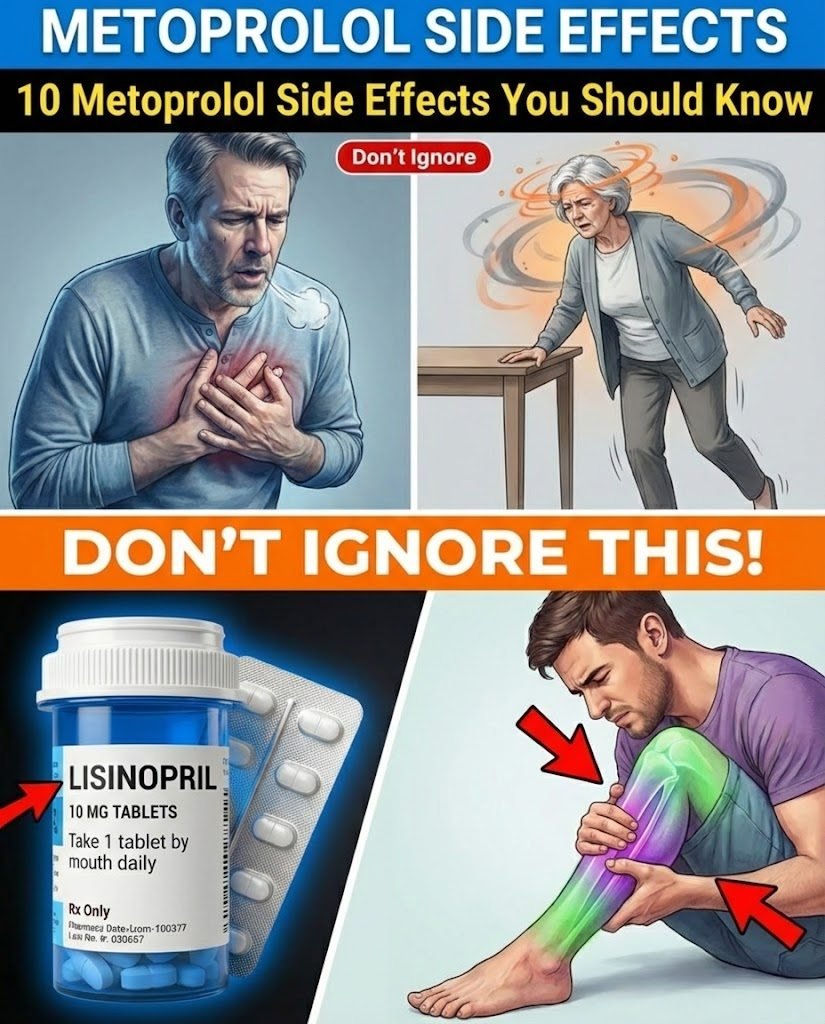
Metoprolol is a commonly prescribed beta-blocker used for high blood pressure, heart rhythm problems, angina, and heart failure.
Most people hear about the common side effects (fatigue, dizziness), but several less-discussed effects can catch patients off guard.
Here are 10 metoprolol side effects that are often overlooked:
1️⃣ Unusual Fatigue That Doesn’t Improve
Not just “a little tired.”
Some people feel persistent low energy because metoprolol slows the heart rate and lowers blood pressure.
2️⃣ Exercise Intolerance
You may notice:
- Getting winded faster
- Lower stamina
- Difficulty reaching target heart rate
Because beta-blockers limit how fast your heart can beat during activity.
3️⃣ Cold Hands and Feet
Metoprolol can reduce circulation to extremities, leading to:
- Cold fingers/toes
- Numbness
- Worsened Raynaud’s symptoms
4️⃣ Sleep Disturbances
Some people report:
- Vivid dreams
- Insomnia
- Restless sleep
Though less common than with older beta-blockers, it still happens.
5️⃣ Mood Changes
Occasionally:
- Mild depression
- Low motivation
- Brain fog
This is subtle and often attributed to “stress” instead of the medication.
6️⃣ Sexual Side Effects
Can include:
- Reduced libido
- Erectile dysfunction
Often underreported but not uncommon.
7️⃣ Masked Low Blood Sugar (Important for Diabetics)
Metoprolol can hide warning signs of hypoglycemia such as:
- Rapid heartbeat
- Tremors
This is especially important for people using insulin.
8️⃣ Slow Heart Rate (Bradycardia)
A heart rate that becomes too low can cause:
- Dizziness
- Fainting
- Weakness
This requires medical evaluation.
9️⃣ Digestive Changes
Less talked about:
- Nausea
- Diarrhea
- Constipation
Usually mild but possible.
🔟 Rebound Effects if Stopped Suddenly
Stopping abruptly may cause:
- Rapid heart rate
- Blood pressure spike
- Chest pain
- Increased risk of heart attack in high-risk patients
Always taper under medical supervision.
🚨 When to Call a Doctor
Seek help if you notice:
- Fainting
- Severe shortness of breath
- Very slow pulse (<50 bpm)
- Swelling or worsening heart failure symptoms
🧠 Important Reminder
Metoprolol is often life-saving and heart-protective.
Many people tolerate it very well. The key is monitoring and dose adjustment — not fear.
If you’d like, tell me:
- Are you taking it for blood pressure, heart rhythm, or heart failure?
- What symptoms are you noticing?
I can help you understand whether they may be related.