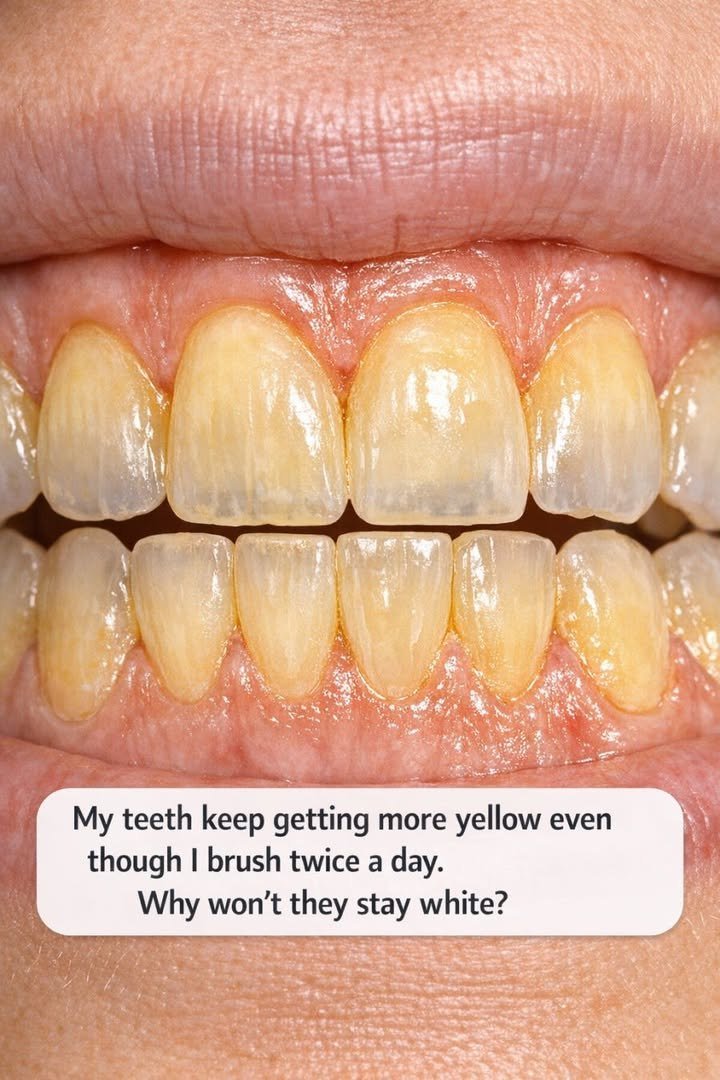
If you’re brushing twice a day and your teeth still look more yellow, you’re not doing anything “wrong.” Whitening isn’t just about brushing — several factors affect tooth color.
Here’s what’s likely happening:
🦷 1️⃣ Natural Enamel Thinning
Teeth have:
- A white outer layer (enamel)
- A naturally yellow inner layer (dentin)
Over time, enamel thins from:
- Age
- Acidic foods
- Aggressive brushing
When enamel gets thinner, more yellow dentin shows through — even if your teeth are clean.
☕ 2️⃣ Staining Drinks & Foods
Common culprits:
- Coffee
- Tea
- Red wine
- Soda
- Berries
- Tomato sauces
These contain pigments that stick to enamel, especially if consumed daily.
🪥 3️⃣ Brushing Technique
Brushing harder doesn’t mean whiter. In fact:
- Hard brushing can wear enamel
- It can make teeth appear more yellow over time
Use a soft-bristled brush and gentle circular motions.
🧬 4️⃣ Genetics
Some people naturally have:
- Thinner enamel
- Darker dentin
Even with excellent hygiene, their teeth won’t look ultra-white.
💊 5️⃣ Medications or Health Factors
Certain antibiotics (like tetracycline in childhood), smoking, or high fluoride exposure can cause discoloration that brushing won’t fix.
🪥 6️⃣ Whitening Toothpaste Limits
Whitening toothpaste:
- Removes surface stains
- Does NOT change the internal tooth color
So results are modest and temporary.
✅ What Actually Helps
✔️ Rinse with water after coffee or tea
✔️ Wait 30 minutes before brushing after acidic drinks
✔️ Use an electric toothbrush
✔️ Consider professional cleaning (removes built-up stains)
✔️ Use dentist-approved whitening strips if safe for you
If yellowing is increasing quickly, uneven, or accompanied by sensitivity, it’s worth seeing a dentist to rule out enamel erosion or other issues.
If you’d like, tell me:
- Do you drink coffee or tea daily?
- Do you smoke?
- Are your teeth more yellow near the gums or overall?
I can help narrow down the likely cause.