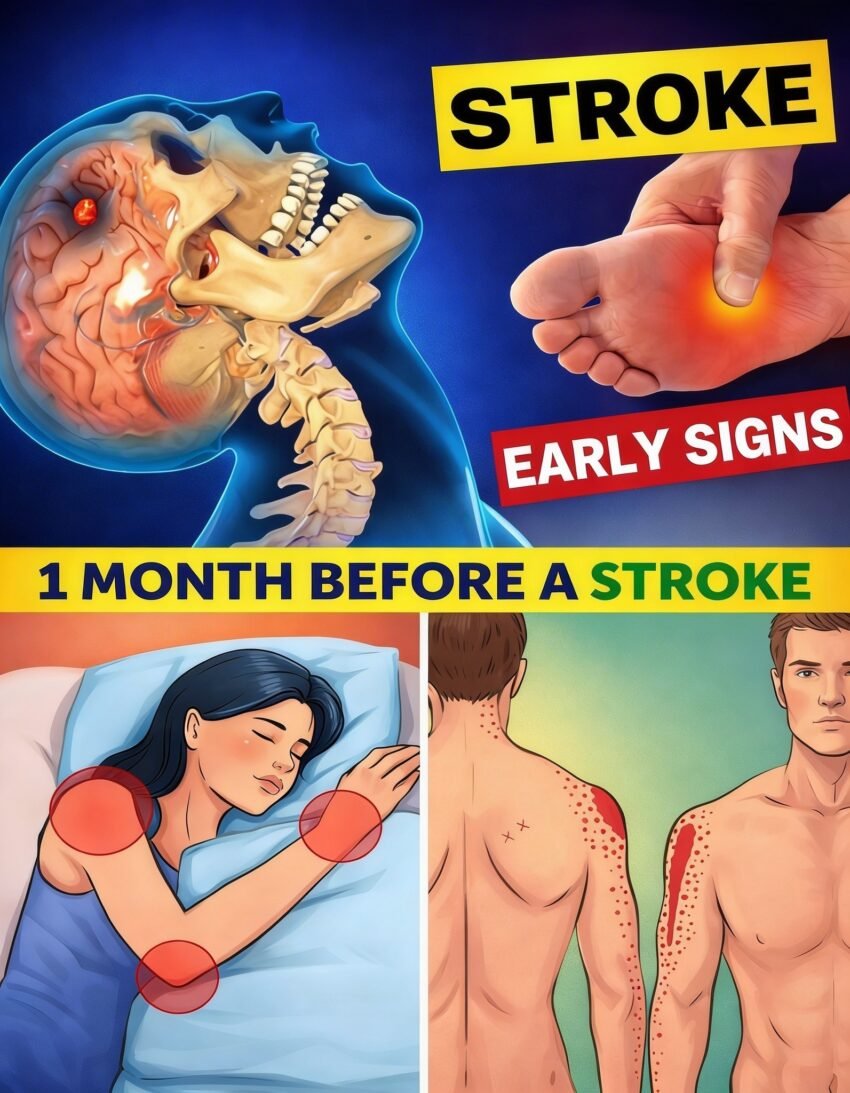
⚠️ 8 Warning Signs of Stroke That May Appear Weeks Before
A stroke happens when blood flow to part of the brain is blocked or a vessel bursts. Many people experience warning signs days or even weeks beforehand, often due to a mini-stroke, also called a:
Transient ischemic attack
A TIA is a medical emergency and a major warning sign of a future:
Stroke
Symptoms may last minutes to hours and then disappear — but they should never be ignored.
1️⃣ Sudden Weakness or Numbness
Especially on one side of the face, arm, or leg.
2️⃣ Slurred or Difficult Speech
Trouble speaking clearly or understanding others.
3️⃣ Temporary Vision Problems
Blurred, double vision, or vision loss in one eye.
4️⃣ Sudden Severe Headache
A strong, unusual headache with no known cause.
5️⃣ Dizziness or Loss of Balance
Trouble walking, coordination issues, or unexplained falls.
6️⃣ Confusion
Sudden difficulty thinking clearly or understanding simple instructions.
7️⃣ Facial Drooping
One side of the face may droop or feel numb.
8️⃣ Brief Episodes That “Go Away”
Symptoms that disappear quickly are often dismissed — but they may signal an impending stroke.
🚨 Remember F.A.S.T.
- Face drooping
- Arm weakness
- Speech difficulty
- Time to call emergency services
Even if symptoms stop, seek medical care immediately.
❤️ 9 Tips to Help Prevent Stroke
While not all strokes are preventable, many risk factors are manageable.
1️⃣ Control Blood Pressure
High blood pressure is the leading risk factor.
2️⃣ Manage Blood Sugar
Uncontrolled diabetes increases stroke risk.
3️⃣ Improve Cholesterol Levels
Lower LDL (“bad” cholesterol) to reduce artery plaque buildup.
4️⃣ Stay Physically Active
Aim for at least 150 minutes of moderate activity weekly.
5️⃣ Eat a Heart-Healthy Diet
Focus on vegetables, fruits, whole grains, lean proteins, and healthy fats.
6️⃣ Maintain a Healthy Weight
Excess weight increases strain on the heart and vessels.
7️⃣ Quit Smoking
Smoking damages blood vessels and thickens blood.
8️⃣ Limit Alcohol
Excess drinking increases blood pressure and stroke risk.
9️⃣ Manage Atrial Fibrillation
An irregular heartbeat called:
Atrial fibrillation
can cause blood clots that travel to the brain. Proper treatment greatly lowers risk.