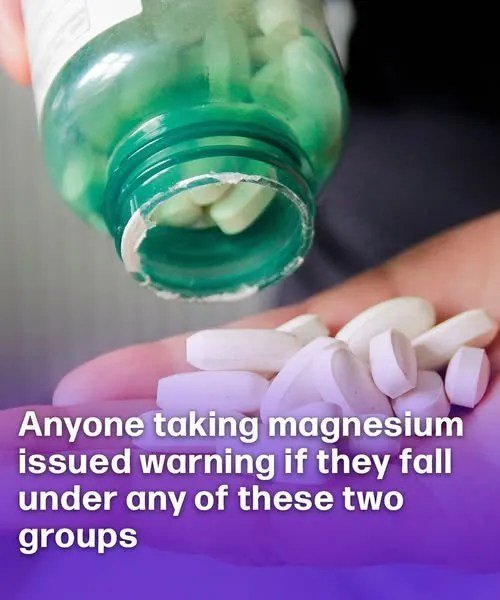
I couldn’t find a specific breaking news article titled “Health Experts Issue New Warning About Magnesium Supplements — Especially for These Two High-Risk Groups”, but the latest official health guidance and expert warnings about magnesium supplements are consistent and important to be aware of. Here’s a clear summary of what experts are saying now:
⚠️ New Caution From Health Experts on Magnesium Supplements
Magnesium is an essential mineral involved in nerve, muscle, and heart function — and many people take supplements to boost levels. However, experts warn that magnesium supplements are not always safe for everyone and can cause harm if taken incorrectly, especially in certain high-risk groups. (Office of Dietary Supplements)
🚨 Key Risks of Magnesium Supplements
- The tolerable upper intake level (UL) for supplemental magnesium (i.e., from pills, not food) is about 350 mg/day for adults. Taking much more can lead to side effects such as diarrhea, nausea, abdominal cramping, and in very high doses, more serious toxicity. (Office of Dietary Supplements)
- The body regulates magnesium from food well, but high supplemental doses are harder for the body to handle. (The Nutrition Source)
- Very high magnesium levels in the blood (called hypermagnesemia) can be dangerous, causing low blood pressure, muscle weakness, breathing difficulty, irregular heart rhythm and even cardiac arrest in extreme cases. (Wikipedia)
👥 Two High-Risk Groups Who Should Be Especially Careful
1. People With Impaired Kidney Function
Your kidneys are responsible for removing excess magnesium from the body. If they’re not working well — due to chronic kidney disease, reduced kidney filtration, or aging — magnesium can accumulate in your blood and cause toxicity. For such individuals, supplements should only be used under medical supervision. (Office of Dietary Supplements)
👉 High doses may lead to dangerous magnesium buildup (hypermagnesemia), so doctors typically avoid recommending magnesium supplements unless there’s a strong reason. (Office of Dietary Supplements)
2. People With Heart Conditions or Taking Certain Medications
Magnesium can affect heart rhythm and interact with cardiovascular medications:
- It may influence how the heart beats, especially in people with heart block or underlying arrhythmias. (Dr.Oracle)
- It can also interfere with some medications (like certain antibiotics, blood pressure drugs, and osteoporosis medications). (Medical Daily)
👉 If you have heart disease or take medicine for blood pressure, diabetes, or heart rhythm, always talk to your doctor before starting supplements.
📌 Practical Safety Tips for Magnesium Supplements
✔️ Check dose: Don’t exceed ~350 mg/day from supplements unless directed by a healthcare provider. (The Nutrition Source)
✔️ Start low: If advised to take magnesium, begin with a lower dose to avoid GI side effects (like diarrhea). (Nebraska Medicine)
✔️ Take food: Taking magnesium with meals can help reduce stomach upset. (Medical Daily)
✔️ Monitor medications: Ask your pharmacist if magnesium interacts with your prescriptions. (Medical Daily)
✔️ Prefer food sources: Nuts, seeds, leafy greens, beans and whole grains provide magnesium naturally with lower risk of overdose. (Office of Dietary Supplements)
🧠 Bottom Line
Magnesium supplements can be helpful — but they are not risk-free. Experts are warning that they must be used with caution, particularly for:
- People with kidney impairment
- Those with heart conditions or on certain medications
For most healthy adults, moderate magnesium from food or supplements within recommended limits is generally safe, but always discuss supplements with your healthcare provider first.
If you want, I can also provide a simple magnesium-rich recipe to help you boost your intake naturally through food instead of pills. Just let me know!